Showing posts with label company: Thales. Show all posts

February 22, 2012

French Army's FÉLIN digitized soldier system participates in a Franco-British live exercise


News Report

As announced by French Army and then reported by Defence-Aerospace, soldiers of the French 8th Marine Infantry Parachute Regiment (8th RPIMa) and soldiers of the UK 5th Battalion Royal Regiment of Scotland took part on Feb. 13-17 in a bilateral Franco-British Combined Arms Live Fire Exercise (CALFEX). During the event, French soldiers operated the new digitized soldier system Fantassin à Équipements et Liaisons Intégrées (FÉLIN). The system was tested under tactical conditions intended to closely reproduce those normally encountered on theaters of operation on which the French army is likely to be deployed.

The Technology

Sagem's FÉLIN (Fantassin à Équipements et Liaisons Intégrées) is an integrated soldier system designed to enhance all the dismounted soldier’s operational functions: protection, observation, C4I, weapons use, mobility and support. The system is customized into five configurations for different levels of command, with the standard configuration including a portable computer, a voice and data radio, new combat clothing with body armour and a new ballistic helmet.

The individual soldier system is equipped with a radio and a GPS. The system exploits a dedicated voice and data network that connects the individual soldier to other infantrymen in the section and to the section commander, who is connected to the vehicle battle management system (Sagem's SITEL). FÉLIN's tactical radio is the "VHF-over-IP"  PR4G VS4 from Thales, which provides tactical internet connectivity and links the dismounted soldier to the vehicle's SITEL.

FÉLIN is one of the most studied soldier systems to date, in terms of integration. The French DGA (Délégation Générale pour L'Armement), Sagem and the French Army have worked to create something very close to the needs of the soldier in terms of ergonomics, integration and understanding the battlefield mission. Specifically, the DGA provided a target weight for the system of less than 25kg, to include the entire system, weapons, ammunitions, and 24-hour energy, food and water provisions. Effort was also directed to the selection of the energy supplies and the method of recharging batteries.

The Context

In 1996, the French French Ministry of Defence Procurement Agency (DGA, Délégation Générale pour L'Armement), placed a contract on an industrial team led by Thales for the development of a dismounted combatant equipment technology demonstrator (équipement du combattant débarqué) or FÉLIN. The system was tested over a two-year period from 1999 and 2001, when the DGA invited Sagem and an industrial team of Giat and Thales to carry out FÉLIN definition studies. The DGA selected Sagem as the preferred bidder in 2003 and awarded the FÉLIN V1 (version 1) contract in March 2004.

References: French Army (1), Defence-Aerospace (2), Defence-Talk (3), Army-Technology (4)

February 16, 2012

Thales starts delivery of SOTAS digital intercoms to Brazilian Army through its local subsidiary Omnisys

News Report

As reported by Forças Terrestres, Thales's brazilian subsidiary Omnisys has delivered the first batch of SOTAS intercoms to equip brazilian army vehicles, under the terms of a contract that was awarded on last September 2011 by the Centre of Communication and Electronic Warfare (CCOMGEX, Centro de Comunicações e Guerra Eletrônica do Exército). This is the debut of this product in the brazilian market, whose demand is estimated at about three thousand units.

SOTAS intercoms will be integrated into the new Iveco's Urutu VBTP MR-Guarani, and the less modern M113.

The Technology

Developed for use in armored and utility vehicles, the SOTAS digital intercom system provides communication between crew members inside a vehicle and externally over combat net radios and field cables. SOTAS is a highly modular star network consisting of a central switch and several crew stations. Dependent on the functionality of the crew, specific boxes are available providing different functionality (e.g., Commander's Box, Crew Box, Remote Control Box). Using the latest digital transmission technology, voice is distributed digitally over the system providing excellent quality. Using Digital Signal Processors, any noise is filtered out, and the system will switch on automatically in case of any voice communication. The single coaxial highway cables carry power, digital voice, control, and signaling data between the elements of the system. The use of simple coaxial cables ensures easy installation and error-free operation.

SOTAS services are not limited to individual vehicles. SOTAS offers multi-media intervehicle networking: voice, data, video communications, sharing of radios, sensors and computer resources, etc. Vehicles can be connected in any order and in any topology. On connection, SOTAS automatically adapts to the new topology; no management action is required. Thanks to its system architecture, SOTAS provides full support of information from the operations center to the warfighter in the field. The SOTAS gives fighters a joint situational awareness, and with its modular concept, it can be easily adapted and expanded at any time, without interfering with the initial installation.

SOTAS has been installed in nearly 50 vehicle types, spread over 28 different countries. More than 18,000 systems have been deployed worldwide.

Comments

"This contract is very important because it results from a national competition, where Thales is transferring the technology to Omnisys, totally in line with the strategy of the Brazilian government regarding the development of defense industry in Brazil," explained Laurent Mourre, Director General of the Thales Group in Brazil.

References: Forças Terrestres (1), Thales (2)

January 10, 2012

Thales' GeoMux SDR waveform provides simultaneous Voice, Data and Blue Force Tracking


News Report

As illustrated in a recent press release, Thales has launched a a new VHF waveform, named GeoMux, which provides simultaneously three main services - Voice, Data and Blue Force Tracking - answering perfectly the interoperability requirement of modern Battlefield Management Systems (BMS). The new GeoMux waveform will become part of Thales’ PR4G F@STNET - Combat Net Radio. Specifically, GeoMux waveform will equip all PR4G F@stnet radio models, i.e. handheld, manpack and vehicle stations.

The Technology

GeoMux is an advanced Electronic Protective Measure (EPM) VHF waveformwhich includes a unique transverse communication capability allowing the radio to operate simultaneously on two independent radio channels. The first channel is used for normal voice and data traffic while the second channel is used to exchange geographical data.

With network centric operation, the need for information increases significantly. Today, it has become essential to efficiently interconnect the various actors in military operations at all levels, from national Joint Headquarters down to soldiers in remote areas. Seamless interoperability is the key word, enabling cooperative operations with allied forces over legacy and future networks. Supporting these new capabilities and offering simultaneous Voice, Data and Blue Force Tracking, GeoMux meets all user operational requirements in a single radio equipment.

Comments

With this new waveform in its software library, Thales once again demonstrates its innovation capacity and its skill in software defined radio technologies” said Patrice Caine, Vice President of Thales in charge of radio communications activities.

References: Thales (1,2)

December 20, 2011

Contemporary airborne battle management systems


A remarkable review of contemporary airborne battle management systems has been issued by Jane's, which illustrates how modern technologies have evolved to aid the fight by increasing situational awareness, facilitating mission execution and suppyling tactical information quickly to commanders.
Although the technologies involved have advanced massively since their inception, current activity in the field has its roots in American, French and Soviet air-mobile doctrine and the Vietnam War where there was a need for effective, near-realtime management of close air-support assets. The air-mobility requirement has generated a number of helicopter applications that are capable of acting as airborne and ground-based command posts, with fixed-wing assets such as America's EC-130E Airborne Battlefield Command and Control Center (ABCCC) handling the air-support management role.
Among the key systems and platforms that underwent to Jane's review we mention the following ones:
  • The Airborne Battlefield Command and Control Center Capsules (ABCCC) that are embarked on U.S. EC-130s. As an Air Combat Command asset, ABCCC is an integral part of the Tactical Air Control System. While functioning as a direct extension of ground-based command and control authorities, the primary mission is providing flexibility in the overall control of tactical air resources. In addition, to maintain positive control of air operations, ABCCC can provide communications to higher headquarters, including national command authorities, in both peace and wartime environments.
  • The Racal (subsequently Thales) Airborne Mission Support System (AMSS), deriving from derived from its carry-on Light Mission Support System (LMSS), equipped aboard three UK E-3D aircrafts, which provides a two-star commander with tactical information such as air-tasking orders, combat search-and-rescue plans, area weather reports and intelligence updates in near-realtime.
  • The Direct Air Support Center - Air (DASC-A) C2 architecture exploited by U.S. Marine Corps' KC-130 transport/tanker aircrafts, which is capapble to process immediate air support requests; to coordinate aircraft employment with other supporting arms; to manages terminal control assets supporting Ground Combat Elements and combat service support element forces; to control assigned aircrafts, unmanned aerial vehicles (UAVs), and itinerant aircraft transiting through DASC controlled airspace.
  • The rail-mounted French Army's HM-PC Valorisé helicopter-based airborne command post system, designed for installation aboard legacy Cougar and Puma helicopters, which is expected to become operational in 2013 at the conclusion of technical and operational field evaluations. The system provides the staff users with voice links and data connections from platform level all the way up to divisional headquarters, interlinking the battle-management system terminals installed in individual reconnaissance and support helicopters.
  • Northrop Grumman's Battlefield Airborne Communications Node (BACN), already installed in three E-11A Global Express aircrafts and two Global Hawk UAVs, which enables essential situational awareness from small ground units in contact up to the highest command levels.

Read the Full Report (subscription is required)

Other References: GlobalSecurity.org (1), Northrop Grumman (2)

December 16, 2011

Thales' SelTrac Communications-Based Train Control system


News Report

As announced in a recent press release, Thales has opened the last phase of Mecca’s new 18.5 km metro line on schedule and in time for the Hajj pilgrimage, the world’s largest religious gathering. Thus, the line transports pilgrims between holy sites, reducing travel time between Arafat and Muzdalifah from five hours to just ten minutes.

The Automatic Train Operation system for the Mecca metro improves performance by allowing “hands off” operation by drivers. The solution ensures that trains comply with required track speeds and operating conditions to ensure efficient, safe travel at all times.

Thales has provided a complete solution for the Mecca metro project, including signalling solutions based on its SelTrac Communications-Based Train Control system (CBTC) , fully integrated communications, an Operation Control Centre (OCC) to supervise the line and an automated passenger information system.

The System

With the constant pressure to minimize operating costs and the need to bring system improvements on line faster, many transit operators are preferring the flexibility that communications-based train control technology provides. Answering the call for modern signalling, Thales' SelTrac CBTC offers the opportunity to enhance performance and safety and lower life-cycle costs. SelTrac systems are installed on transit networks around the world.

From fully automated, integrated solutions to upgradeable solutions and overlay re-signalling techniques to reach beyond the limitations of conventional fixed-block designs, SelTrac system solutions readily meet the needs to move more people more quickly and increase revenue potential.

With built-in flexibility, SelTrac addresses the diverse requirements of operators needing basic Automatic Train Protection (ATP), cab-signalling, or CBTC-based operations.

Comments

"After managing the security supervision of the holy sites, Thales is very proud to have contributed once again to the improvement of the pilgrimage with this automatic metro,” said Michelangelo Neri, VP for Thales’s civil business in Riyadh, Saudi Arabia. “The new transportation system developed for the Mecca metro combines all the latest signalling and communications technologies.”

References: Thales (1,2)

December 15, 2011

U.S. Army completes key operational tests of General Dynamics' Rifleman Radio


News Report

We have already highlighted the importance of U.S. Army's Network Integration Evaluations (NIEs) as an effective process to integrate and mature the U.S. Army’s tactical network, as well as to evaluate deliberate and rapid acquisition solutions (NIE has been selected as one of the key C4I trends of the last months).

In such context, we report a recent press release from General Dynamics which announces that the JTRS HMS AN/PRC-154 Rifleman radio completed its Initial Operational Test and Evaluation during the U.S. Army’s recently concluded NIE 12.1 at Fort Bliss, Texas. Members of the 2nd Brigade, 1st Armored Division (2/1 AD) evaluated the AN/PRC-154 Rifleman radio in a variety of tactical exercises that included convoy operations, reconnaissance, counterinsurgency and medical evacuation missions.

The Rifleman radio, one of the Joint Tactical Radio System (JTRS) Handheld, Manpack, Small Form Fit (HMS) family of radios, is the first JTRS radio to use the Soldier Radio Waveform (SRW) to enable secure networked communications among platoon, squad and team-level soldiers and their leaders. The Initial Operational Test and Evaluation is the last formal test required by the military before the radios enter full-rate production.

During the NIE exercise, soldiers used the radios in conjunction with handheld devices running Joint Battle Command-Platform software, i.e. the future version of the U.S. Army's friendly force tracking and messaging system, which also allows users to plot hazards and enemy locations on a digital map. Plugged into the Rifleman Radio, these devices provided mission command and situational awareness information down to soldiers at the tactical edge.

During the test, the Army captured data on the radio's performance in two ways: through instrumentation on the systems themselves, and through human data collectors who accompanied soldiers throughout their missions. U.S. Army will evaluate those test results during the coming months, as it finalizes the makeup of its network Capability Set 13, which will begin fielding to up to eight brigade combat teams in fiscal year 2013.

The System

General Dynamics' Rifleman Radio delivers networking connectivity to the frontline soldier in a lightweight, ruggedized, body worn device. The radio transmits voice and data simultaneously utilizing the Soldier Radio Waveform (SRW), which operates in the 1.755-1.850 GHZ frequency range and supports digital 16 KBPS voice and data at 1 MBPS.

SRW represents a networking waveform capable to perform in a complex military environment, in the presence of adversarial threats, and providing a secure high-bandwidth communications link specifically designed for platforms that are small, light, don’t consume much power and use low-profile antennas.

The AN/PRC-154 is body worn, minimizing the warfighter’s combat load while increasing functionality. Designed to bring secure (Type 2) inter-squad communications to any warfighter on the tactical edge of the battlefield, this radio also enables Team and Squad Leaders to track individual soldier GPS locations. This radio connects every warfighter to the combat network, emphasizing safety and enabling enhanced situational awareness and better decisions at the very edge of the battlefield.

The software-programmable AN/PRC-154 radios, which can use encryption to safeguard information, are built to send Internet Protocol packets of data, voice, video and images via multiple waveforms between static command centers, vehicles on the move, and dismounted individual soldiers on patrol. The JTRS waveforms, SRW and the Wideband Networking Waveform, known as WNW, are integrated with the satellite communications backbone of the Army network, Warfighter Information Network-Tactical, or WIN-T, to transmit that information on the upper tactical internet.

The Context

The Rifleman Radio is part of the JTRS Handheld, Manpack, Small Form Fit, or simply JTRS HMS, family of radios.

JTRS HMS is a materiel solution meeting the requirements to support U.S. Special Operations Command, U.S. Army, U.S. Marine Corps, U.S. Air Force, and U.S. Navy communication needs.

In June 2011, the JTRS HMS program achieved a Milestone C decision, enabling the Low Rate Initial Production of 6,250 AN/PRC-154 Rifleman and 100 AN/PRC-155 Manpack radios. JTRS HMS radios take full advantage of the government’s library of waveforms, including the Soldier Radio Waveform, and in the future, the Mobile User Objective System (MUOS) and Wideband Networking Waveform (WNW) critical to communicating on the U.S. Army’s emerging tactical communications network.

The Embedded Small Form Fit versions of HMS will be used for Joint Service Ground Sensor Networks, Intelligent Munitions deployment and usage, Unmanned Vehicles and other platform applications, including support for the Early-Infantry Brigade Combat Team technical performance and integration.

General Dynamics C4 Systems is prime contractor for the JTRS HMS program. The JTRS HMS team includes BAE Systems, Rockwell Collins, and Thales Communications.

The results of the tests on the Rifleman Radio should now dissolve the questions of a possible affect of the JTRS GMR program termination on the JTRS HMS program. As already discussed, large cost overruns and numerous schedule delays forced the U.S. Army to cancel the JTRS Ground Mobile Radio system. The GMR program has been terminated on last October in line with the Nunn-McCurdy statute, which calls for a program's termination once unit-procurement costs exceed the original estimate by 25 percent unless it is deemed essential to national security.

Comments

We’re getting great feedback from soldiers who prefer the Rifleman radio, rather than lugging bulky wideband handheld radios that require extra batteries,” said Chris Brady, vice president of Assured Communications for General Dynamics C4 Systems. “With the Rifleman Radio, soldiers can connect their cell phone or computer and join the network—anywhere they fight.

"I use it for overall command and control because it builds a network that allows me to talk to my subordinate elements," said Capt. Ryan McNally, company commander with the 2/1 AD. "It's the first time I've actually had radios down at the squad level. So my dismounted riflemen, they all have the radio as well. It allows them to talk to their team leaders when they're spread out, and also allows them to talk to the squad leader."

"No matter what kind of organization you're running, if you have dismounts who are going to be on the ground you like to be able to see where your personnel are," said 2nd Lt. Travis V. Mount, 2/1 AD platoon leader, speaking about the capability of the Rifleman Radio to show the positions of his troops, which allowed him to save time by immediately adapting and executing his plans rather than tracking down personnel first. "If all I need is information on their position, I don't have to go through an intermediary. I can on the spot adapt my plan."

"Instead of having to go to the tactical operations center at the end of the day to download the information on the events and observations, I can either (do it in) real time or when I have a lull in the mission," Mount said. "I can just plug it in right there."

Further Readings
  • Joint Tactical Radio System HMS (pdf)

References: General Dynamics (1,2), JITC (3), Defense Systems (4), DVIDS (5), JPEOJTRS(6)

November 29, 2011

Contract Award: Thales and EADS to enhance the French Armed Forces' geographic database system


News Report

As announced in a recent press release, the French geographic Institute IGN (Institut Géographique National), acting as the contracting authority on behalf of the Direction Générale de l'Armement (DGA) of the French Ministry of Defence, has contracted Thales and Cassidian to carry out the second phase of the TopoBase Défense Operation. The goal of this operation is to produce data to feed into defence geographical databases.

The preparation and conduct of military operations require the Armed Forces to be able to rely on a cartographic reference that is pertinent and accessible to everyone in order to achieve an accurate shared assessment of the operational situation. For this reason IGN selected the Thales-Cassidian consortium with Thales acting as the prime contractor for the TopoBase Défense Operation. This operation is intended to set up an appropriate system for producing geographical data (e.g. vector databases, ortho-images, raster maps, etc.) to be fed into defence geographical databases.

The Thales-Cassidian consortium is responsible for the complete process, from receipt of requirements of the Armed Forces General Staff to quality control of the products. The process also includes drafting of specifications, definition of the production reference frame (procedures, tools, testing) and the management of subcontractors in order to guarantee the consistency and homogenity of the totality of TopoBase Défense products.

The purpose of the contract, which has a duration of six years, is to supply the French Armed forces General Staff with digitised geographical data required for the operation of numerous weapon and information systems. The use of data from the TopoBase Défense Operation, which guarantees consistency of geometry and format, also contributes to system interoperability.

The Technology

Today, modern Armed Forces no longer buy imagery alone, but a global capability to meet the specifications of complex products like DEMs (Digital Elevation Models), land-cover data and multiscale vector databases through internal or outsourced production lines. This guaranty is provided by Standalone, Multi-Source Data Kits, through which suppliers undertake to provide a coherent workflow able to generate a geospatial product or family of products.

This new approach was initiated in France by the DNG3D defence programme, starting in 2002 along with the launch of Reference3D©. This product contains a DEM basemap plus a highly reliable orthoimage that serve as a foundation for most subsequent value-added products. The DNG3D system takes raw data from a wide range of commercial and military observation sensors to provide national defence systems with high-quality, high-precision geographical data.

Since 2005, the TopoBase Défense Operation (within the frame of the Multinational Geospatial Co-production Programme), ensures the industrial-scale production of a complete range of raster and vector geospatial products using imagery from 12 civil and military satellites. TopoBase is primarily a vector database with an approximate scale of 1/50 000, which also includes background images and digital terrain models that can be used by existing weapons systems.

The Context

The technological revolution that has resulted from the explosion in the use of digital technologies in the civilian world has put information at the very heart of the instruments of power. Mastery of information is one of the major capabilities to be acquired. Knowledge of the terrain over which operations will be conducted is a prerequisite for their success; armed forces must therefore be able to gather, process and distribute the geographical information needed for the proper functioning of the command and weapon systems that equip the forces engaged; this applies equally to the projection of forces or of power, characterised respectively by the deployment or otherwise of a significant number of troops on the ground.

In this new context, armed forces are called on to operate at short notice with significant dispersion of their units in remote, little known and extended theatres. This means that availability of geographical information must be improved and a large database must be created to cover regions where even mapping data may be lacking.

In 1996 the French Defence Ministry responded to this requirement with the launch of a dedicated defence programme: DNG3D (Données Numériques Géographiques et 3 Dimensions = 3D Digital Geographical Data). The DNG3D programme aimed at offering a collection system from appropriate sources, including image sources, both civil and military (primarily satellite-generated); ourchase of off-the-shelf geographical products, as well as Inter-allied procurement of geographical sources or products.

The first phase of the TopoBase Défense Operation was awarded by the DGA to the Thales-Cassidian consortium in 2005 under the DNG3D programme.

Comments

"I am very proud that the DGA has renewed its confidence in the Thales-Cassidian consortium after awarding us the first part of the TopoBase Défense Operation and the Deployable Geographic Modules project," commented Jean-Michel Lagarde, Thales Vice-President, in charge of Protection Systems. "This success is attributable to the strong complementarity between the know-how of Thales and Cassidian, and to the creation of multiple partnerships with highly innovative European SMEs specialised in geomatics. A total of nearly 150 people are combining their skills to ensure the success of this operation."

"Global information control and knowledge of the terrain constitute a crucial force multiplier for the General Staff. That is why our company is particularly proud of the confidence displayed by the IGN through its selection," added Franck Calvet, Vice-President of "Integrated Systems" at Cassidian

References: EADS (1), isprs.org (2), Thales (3), ixarm (4)

UK MoD to enhance integrated Aircraft Defence Capabilities


News Report

As announced in a recent press release, UK Ministry of Defence has begun a development programme to make aircraft better equipped in the hostile environments that UK aircraft are likely to encounter during future operations.

The Defence Science and Technology Laboratory (Dstl) working with UK industry, has brought together the country’s leading scientists and engineers to develop the Common Defensive Aids System (CDAS). This would allow air forces to more easily upgrade existing platforms with new technology and more easily reprogram such defensive aids systems (DAS) for different missions.

This development, CDAS Technology Demonstrator Programme (TDP), is a project to establish that the concept works practically, and will be achieved through collaboration - a partnership between UK MoD and an industry team led by Finmeccanica's Selex Galileo, and comprising Thales, QinetiQ and BAE Systems.

The Technology

Defensive aids systems (DAS) consist of two parts, sensors, which identify the threat, and effectors, which employ appropriate countermeasures to defeat that threat, for example flare or chaff deployment. Historically, DAS sensors and effectors, sometimes different on different aircraft, have communicated through different, proprietary interfaces developed by the supplier companies.

CDAS represents a new systems approach, based on an ‘open architecture’ - components which can freely communicate with any other component regardless of manufacturer, to improve the modularity of sensors and effectors and coherence of the DAS across aircraft.

The CDAS TDP includes a current missile warning system built by BAE North America, a new infrared threat-warning system being developed by Thales, a developmental system for detecting hostile gunfire from the ground and a laser warning system, all feeding into the DAS controller. On the output side of the demonstrator system is a next-generation laser countermeasure built by Selex Galileo. Other countermeasures could include chaff (tiny pieces of material to confuse radar systems) or flares. A Qinetiq on-board planning system has also been integrated into the TDP.

The Context

John Bowker, Team Leader at Dstl said: “The ‘eureka moment’ really came along when we developed the new ’CDAS spine’ concept which now feeds into the MOD’s CDAS programme.

The CDAS spine concept, evolved from the battle proven Helicopter Integrated DAS (HIDAS) on UK Apaches, was recognised by Dstl scientists and engineers as the most effective model to input into the DAS upgrade on Chinook helicopters. The implementation of this upgrade was undertaken with the assistance of global defence specialists including Agusta Westland, Boeing Helicopters, Selex Galileo, BAE Systems, QinetiQ and UK MoD's Defence Equipment and Support (DE&S), who drove the project.

The CDAS would also mean the UK MoD would be able to more fully exploit competition in the defence market because technologies built by different contractors could be used together. Integrating different systems would also enable the UK MoD to configure aircraft for specific missions without having to make major changes to the architecture.

In February 2010, the UK MoD awarded SELEX Galileo a 4 year contract to lead the Common Defensive Aids System (CDAS) Technology Demonstrator Programme (TDP) in support of the UK strategy for air platform protection. Under the TDP, SELEX Galileo is providing a coherent cross platform approach to both acquisition and support of defensive aids suites for both new build and legacy helicopters. The common architecture leverages the UK's existing investment in the Selex Galileo HIDAS (Helicopter Integrated Defensive Aids System) suite in service on the UK Army Air Corps' Apache AH.1 attack helicopter and the Project Baker DAS fit developed for the Royal Air Force Chinook fleet under an urgent operational requirement.

After 18 months of studies and a further 18 months of hardware development, DSTL has now put together a technology demonstrator programme (TDP) in partnership with four defence firms, showing how different sensors and countermeasures can work together under one DAS controller.

DSTL plans to conduct flight trials of the technology by the end of December, after which it will be up to the Defence Equipment and Support (DE&S) department to decide how the system will be manufactured and rolled out across the UK’s air fleet.

Comments

This collaborative approach allowed us to quickly find the best equipment solutions to improve protection to aircraft and personnel," said John Bowker, Team Leader at Dstl. "As MOD’s science and technology specialists, Dstl works with industry and academia to increase our knowledge base and develop effective solutions. The Chinook upgrade is a great example of this and is in Afghanistan right now helping to save lives. Sharing ideas is the most effective way of getting the best capability to the front line.

References: UK MoD (1), The Engineer (2), SELEX Galileo (3)

October 20, 2011

THALES deploys the first national Command and Information System for the French Gendarmerie


News Report

As announced in a recent press release, Thales has successfully deployed the BDSP (Base de Données de Sécurité Publique – Public Security Database), the command and information system for the Gendarmerie Nationale for conducting operations and processing operational information. In concrete terms this means that Thales, via BDSP, is able to unify and modernise the operations management and operational information applications over the entire national territory, including French overseas departments and territories.

Thales BDSP allows gendarmes, from command centre level through to the units on patrol, to access summaries of all available information associated with a mission or intervention. In this way, gendarmes can get all the information they need for executing their duties, securing intervention zones and optimising the resources deployed.

Thanks to Thales's BDSP solution, access to enriched information is possible both nationally and locally. Ultimately, this will lead to some 60,000 gendarmes on over 4300 sites permanently using and feeding data into a central database equipped with a semantic search engine and extremely high-performance operational intelligence analysis and exploitation tools.

Comments

"BDSP is a highly efficient system capable of summarising a large quantity of information and making it available in real time to gendarmes in order to facilitate the running of operationson the ground," explains Pascale Sourisse, Senior Vice President, Defence and Security C4I Systems, Thales. "We are very proud to make available to the Gendarmerie Nationale all of Thales's expertise in order to help them in their daily duties."

References: Thales (1)

October 13, 2011

Contract Award: Thales Alenia Space to investigate a satellite based command and control for UAVs

References: Thales Alenia Space (1)

News Report

As announced in a recent press release, Thales Alenia Space, the joint venture between Thales and Finmeccanica, has won a contract from the European Space Agency (ESA) to lead a nine-month study regarding satellite communications solutions for Unmanned Aircraft Systems, named ESPRIT.

As the leader of an industrial consortium for ESPRIT, Thales Alenia Space will study solutions at both spectrum and system levels. To cover all aspects of the domain, its team includes major actors in the aeronautical satellite communications, UAS, space systems and regulatory issues.

The Initiative

The ESPRIT study (Emerging system concepts for UAS command & control via satellite) will focus on the provision of communication capacity for Command & Control links to Unmanned Aircraft Vehicles flying through civilian airspace. As of today, UAVs are operated exclusively in so-called “segregated airspace” where they do not interfere with non-military aircraft.

October 6, 2011

Planned Acquisition: Norwegian Defence to purchase Thales' Digitised Soldier System

References: Thales (1,2,3)

News Report

As announced in a recent press release, the Norwegian Defence has decided to purchase NORMANS digitised soldier system (Norwegian Modular Arctic Network Soldier) based on the concept that has been designed and tested at the Norwegian Defence Research Establishment (FFI). The Norwegian MoD has asked the Norwegian Defence Logistics Organisation to contract Thales Norway, with Teleplan Globe as partner, for delivering NORMANS.

The System

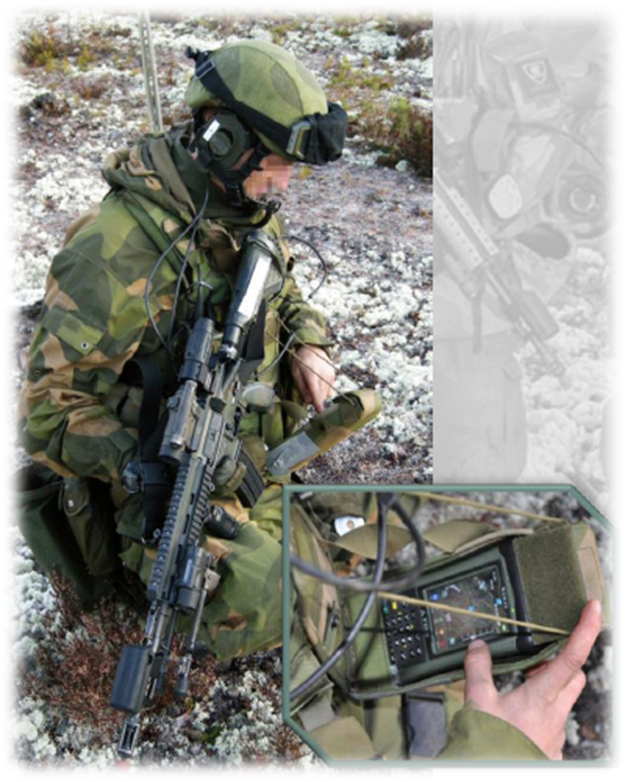
NORMANS gives soldiers superior situational awareness, with blue force tracking, navigation, target hand-off, and text messaging. The system enables soldiers to plan and complete operations with speed, precision and efficiency. The concept consists of: NORMANS Light, designed for the individual team members in a Dismounted Close Combat (DCC) squad, and NORMANS Advanced, tailored to the needs of the DCC squad leader and next in command. The improvement in combat effectiveness and safety are well documented.
NORMANS Light (left) and NORMANS Advanced (right)
NORMANS Light provides filtered situational awareness to all soldiers, keeping the weight and complexity of the system to a minimum, thus multiplying force efficiency and providing force protection.

NORMANS Light weights 150g (without cabling), and is powered directly from the radio, or from a central power unit.

NORMANS Advanced supports squad leaders’ command and control. It provides situational awareness and the secure distribution to subordinate units of orders, timecritical information and up-to-date operational pictures. NORMANS Advanced connects to a NATO C4IS through a national C4I System enabling blue force tracking, command and control and combat air support.

NORMANS Advanced weights 450g (without cabling and battery), and is powered directly from the internal battery. NORMANS Advanced supports a number of commonly used map and messaging formats, as well as IP-based communications.

The Context

The Norwegian Defence Research Establishment (FFI) has led a comprehensive program on forming the future Norwegian soldier solution in close collaboration with operational forces and Norwegian defence industry.

NORMANS has been through a 10 year process of iterative development, where Thales Norway has led the industrialisation of NORMANS digitised soldier system with Teleplan Globe as partner. FFI has documented significant improvement in operational effectiveness and increased safety for the soldier with NORMANS compared to the current solution which is based on paper maps and hand held GPS.

As the Prime contractor, Thales Norway will be responsible for delivering information systems to Norwegian soldiers over a 5 year period

Comments

NORMANS digitised soldier system will provide Norwegian soldiers with improved situational awareness, improved ability to navigate and will provide effective mission planning. As a result of this soldiers will have increased effectiveness and safety in operations”, says Secretary of State in the MoD, Roger Ingebrigtsen.

Soldier modernisation has been a focus area for Thales over the past 10 years. We have had strong collaboration with The Norwegian Defence, the Norwegian Defence Research Establishment and a number of Norwegian industrial players in the process of industrialising the future Norwegian soldier solution. We are proud to be chosen to deliver the NORMANS system, and we are looking forward to continuing the close collaboration with Teleplan Globe and other Norwegian industrial players in order to provide Norwegian soldiers with improved operational effectiveness and safety. NORMANS has already gotten attention internationally and we are also looking forward to offering the system outside of Norway”, says CEO of Thales Norway, Glenn Pedersen

Further Readings
  • NORMANS Digitised Soldier System (pdf)
  • NORMANS Concept (pdf)

September 15, 2011

Contract Award: Thales to provide vehicular digitization for Malaysian Army


Reference: Thales (1,2), Army Guide

News Report

As appeared in a recent press release, Thales has been awarded a major contract for the integration of an advanced open vehicle electronic architecture system for the 257 new 8x8 armoured-wheeled vehicles of the Malaysian Army. Thales acts as a subcontractor of DEFTECH (DRB-HICOM Defence Technologies Sdn Bhd), the local company selected by the Malaysian Ministry of Defence for the design, development and manufacturing of the vehicles.

The Product

Thales will integrate a state-of-the-art Open Information Communication System (OICS) - branded as VSys-net – a vehicle system electronics solution designed to optimise integration and enable information exchange (voice, data and video) both within vehicles and externally. It combines a set of sub-systems and specific equipment that assist the commander during the mission (Battlefield Management System), manage the status of the vehicle components (Platform Management System), assist navigation, provide an optimised situational awareness and enhance survivability.

VSys is a generic vehicle electronics system (systronics) solution with modular hardware and software building blocks, distributing voice, data and video. VSys is adaptable to new and legacy vehicles and allows smooth integration of vehicle subsystems, as well as battle management system and specific mission systems (reconnaissance, fire support, combat…). VSys achitecture achieves integration between tactical data processors and multi-function displays through in-vehicle and multi-vehicle networking for the whole battlegroup.

Through Vsys, the following information are displayed within the vehicle cockpit: Vehicle status information on rugged tactical terminal, Mission system display (e.g. RSTA sensor information), Situational awareness display (local situational awareness from vehicle and sensor information, and shared situational awareness through a BMS and tactical communication server).

The Context

Thales has been selected to provide an integrated and scalable vehicle electronic architecture system including a wide range of new-generation equipment (communications, vetronics, sensors, command & control, mortar, optronics, etc.) to meet the rigorous operational performance criteria of the Malaysian Army.

In order to lead this programme in close cooperation with the customer, Thales relies on its local presence through Thales Malaysia Sdn Bhd and strengthens its local footprint thanks to its Malaysian joint-venture, Sapura Thales Electronics (STE), who will supply the complete HF and VHF radio communications system for the 257 vehicles.

Thales solution will provide a consistent vehicle electronic architecture among the 12 variants (Infantry & Armoured Fighting Vehicles, Command, Anti-Tank, Recovery, Surveillance, etc.). This will reduce integration risks on the overall program, speed up the operation, manage all platform systems in real time and enable optimised support services.

FNSS of Turkey, a joint venture between BAE Systems and Nurol Holding of Turkey, will design, develop and manufacture the 257 DEFTECH AV-8 8x8 wheeled armored vehicles and Integrated Logistics Support for the Malaysian Armed Forces.

The vehicle, to be manufactured by DEFTECH in Malaysia, is based on the FNSS-designed PARS 8x8 multi-purpose, multi-mission, wheeled armored vehicle. The vehicle will be redesigned by FNSS and DEFTECH engineers specifically to meet the requirements of the Malaysian customer.

Malaysias AV-8 8x8 armoured wheeled vehicle program involves the local design, development and manufacture of the vehicle, as well as the integrated logistic support. FNSS will provide the technical assistance and technology transfer to enable DEFTECH to produce the vehicles in Malaysia. The AV-8 will be Malaysias first indigenous 8x8 armored wheeled vehicle family consisting of 12 variants, for use by the Malaysian Army.

FNSS and DEFTECH previously delivered 211 ADNAN Armored Combat Vehicles (ACV) and 8 120mm ACV Mortar Carriers to the Malaysian Army and are about to complete the deliveries of 48 additional ADNAN ACVs under a separate contract.

Comments

“We are very proud of the renewed confidence in Thales’s solution expressed by the Malaysian Army. Thales strengthens its commitment to Malaysia and the local defence industry with know-how and technology transfer.” explains Jean-Philippe Durieux, Country Director, Thales Malaysia. “Thales’s excellence and expertise in complex systems integration make us a trusted partner, able to respond to the armed forces’ ever growing needs.